




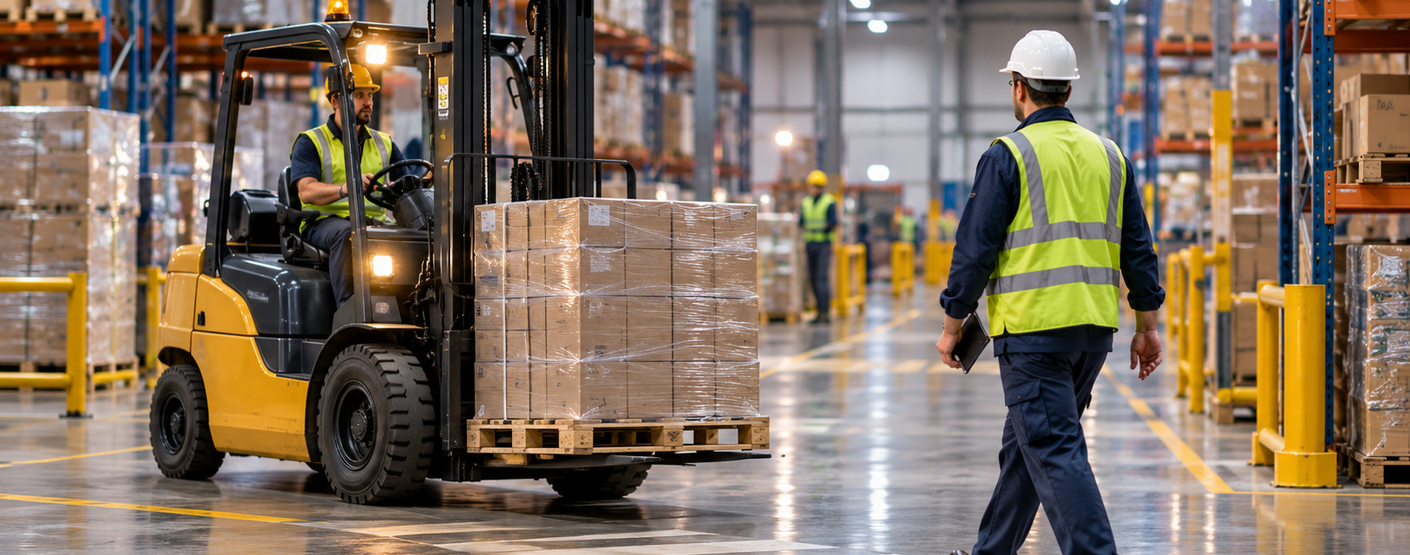
Monitoring forklift safety with AI video analytics
Forklifts are essential to warehouse and manufacturing operations, but the environments in which they operate remain high-risk. In 2026, Eurostat reported 2,366 non-fatal workplace accidents per 100,000 employees in transportation and storage, while manufacturing recorded 1,687 — placing both sectors among those with relatively high accident rates.
Inside these facilities, forklifts often share space with pedestrians, loading teams, storage racks, and other moving equipment. AI-powered video analytics can provide an additional layer of visibility around these interactions and help safety teams identify situations that require attention.
Why forklift areas require closer monitoring
Warehouse traffic rarely follows a completely predictable pattern. Forklifts move between storage aisles, loading docks, production areas, and dispatch zones while employees cross many of the same routes.
Risk can increase around blind corners, narrow aisles, loading and unloading areas, or locations where pedestrian and vehicle paths intersect. A reversing forklift or a worker unexpectedly entering an active handling zone can quickly create a dangerous situation. This makes warehouse pedestrian collision avoidance and pedestrian vehicle separation monitoring particularly important in busy logistics and production environments.
Physical markings, barriers, mirrors, and staff training remain fundamental safety measures. But they cannot always show supervisors when unsafe behavior repeatedly occurs or provide visibility across every operational area at once. This is where smart video surveillance for logistics can add a continuous monitoring layer alongside existing safety procedures.
How video analytics adds another layer of safety
AI video analytics can help monitor predefined areas where pedestrian access needs closer attention. For example, cameras can monitor safety zones alongside forklift routes or around loading operations and generate an event when a person enters a configured restricted area. This allows operators to focus on situations that may require immediate verification instead of continuously watching multiple camera feeds.
Recorded events can also support incident investigation. If a near miss, collision, or disputed event occurs, teams can review relevant footage to understand where people and equipment were positioned and identify recurring problem areas. Over time, this visibility can help facilities evaluate whether pedestrian routes, working zones, or operational procedures need to be adjusted.
How TRASSIR supports safer industrial zones
TRASSIR provides the technological core for integrated AI-powered security and video surveillance systems across manufacturing, warehouse, and logistics environments.
For areas with forklift activity, neuro detection can support monitoring of predefined safety or restricted zones, helping identify people entering areas where access should be controlled. Combined with centralized video management and recorded footage, this can improve visibility around loading areas, production zones, warehouse routes, and other locations where people work near moving equipment.
This type of monitoring can also contribute to industrial traffic management analytics, helping facilities better understand how forklifts, pedestrians, and other vehicles use shared operational areas.
A recent example comes from Altınyaldız A.Ş. in Turkiye, an engineering and manufacturing company operating a 10,000 m² production facility. TRASSIR enhanced the company's existing camera infrastructure with AI-based zone monitoring. When a person enters a designated restricted area, the system can automatically generate an event and activate an audible warning through connected loudspeakers.
While this project focused on perimeter and restricted-zone control rather than forklifts specifically, the same principle is relevant to industrial traffic areas: video analytics can continuously monitor defined zones and draw attention to potentially unsafe pedestrian access.
Building better visibility around moving equipment
Forklift safety depends on more than monitoring the vehicle itself. It also requires understanding how people move around active material-handling areas. By combining physical safety measures with AI forklift safety monitoring and searchable video, industrial facilities can strengthen supervision, investigate incidents faster, and identify areas wh ere pedestrian and equipment movements may require better separation.
For solution providers, this creates an opportunity to add intelligent safety monitoring to existing video infrastructure and help customers build safer warehouse and production environments.
What's New?
All NewsTry TRASSIR For Your Business
Learn more about how TRASSIR analytic modules work! Demo mode is an opportunity to see for yourself how the system works, and also check the interface and test all the functions.Success!
We will contact you as soon as possible